Chinese comedian Li Haoshi has been fined $2.6m, and his employer has been fined $1.3m, after Li made a statement, deemed by authorities to be offensive to the Chinese military, in a live broadcast. Li was performing in Shanghai, where he quipped, in reference to two dogs that he adopted, that they "were able to win battles, with a first-rate style". The phrase Li was using alluded to propaganda descriptions of the People’s Liberation Army’s strength, and became associated with President Xi Jinping after he first used it. Critics argue that China's sensitivity to even the smallest slight against the military is symptomatic of increasing nationalism and authoritarianism in the country.
Although China is trying to attract foreign investment, its actual utilisation of foreign direct investment (FDI) fell by 3.3% to $73.5bn in the first four months of the year, compared to the same period a year ago. The country has significant work to do in enticing investors, since they play important roles in China's access to capital, technology and expertise in management. The tensions with the US remain a hindrance, compounded by Beijing's crackdowns on fund and due-diligence organisations over national security concerns has fueled concern among investors.
China's Zhejiang Geely Holdings has increased its stake in Aston Martin Lagonda Global Holdings to around 17%, making it the third-largest shareholder in the luxury carmaker. Geely will reportedly invest approximately £234m ($290m) to receive both new and existing shares, while Aston Martin will receive £95m cash for the new shares.
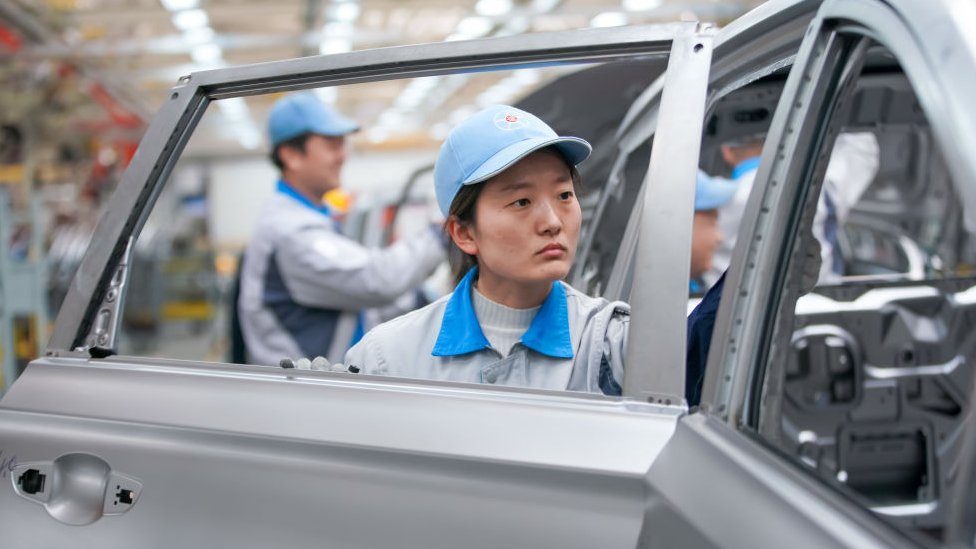
New energy vehicle makers will enjoy an annual growth rate of over 30% in China this year, with EVs expected to account for 35% of all the country's vehicles, according to Fitch analysts. The report predicts that traditional car manufacturers will move into new areas such as vehicle intelligence, sales and infrastructure as the prices offered in the current discount war become unsustainable. Meanwhile the report also notes that NEVs, while outperforming traditional vehicles in functionality and comfort, struggle with capital and regulatory restrictions regarding the adoption of fast-charging and higher-level automated driving systems.
Foreign automakers are being hit by China's improved domestic competition, which is pushing prices down and lowering their market share. Car companies are looking at different courses of action, with some such as Volkswagen doubling down on China, while others, such as Ford, are adopting a more focused approach, pulling back to commercial vehicles to concentrate on specific areas of development and listening to consumer trends. The US firm's move underlines the need for carmakers to act judiciously when attempting to lay down roots in regions with different sales tendencies.
A Chinese comedian is under police investigation after an ad-libbed stand-up joke led to his management company being fined $2.1m by the Beijing Municipal Bureau of Culture and Tourism and having its performances suspended in Beijing and Shanghai. Li Haoshi had compared his dogs chasing squirrels to the People’s Liberation Army motto, a comment that was deemed to have “hurt national feelings” and “damage national honour”. His employer has also terminated his contract. Stand-up comedy has grown in popularity in China, but the incident has fuelled concerns that the government is tightening censorship and increasing intolerance of dissent.
President Xi Jinping offered to help the five central Asian republics with their security and defense capabilities at the inaugural China-Central Asia Summit, held in the Chinese city of Xi’an. The summit was also used to discuss strengthening economic and energy ties with countries including Kazakhstan, Kyrgyzstan, Tajikistan, Turkmenistan and Uzbekistan. Increasingly powerful China is likely to become further involved in the quest for influence over the resource-rich republics, which all enjoyed a better trading relationship with China over Russia or the G7 bloc last year. Meanwhile, China is cementing its role as Russia's principal economic partner, enabling it to side-step Western sanctions relating to the crisis in Ukraine.
Hong Kong stocks, including Alibaba, Tencent Holdings, and Baidu, fell following disappointing revenue growth of 2% for the fourth quarter at Alibaba, and concerns that China's post-Covid recovery is losing momentum. The Hang Seng Index slumped by 0.9%, with the Tech Index falling by 1.8%. While the Shanghai Composite Index was little changed. Goldman Sachs warned that rising government debt levels would limit China's ability to roll out additional pro-growth policies through fiscal policy. Major Asian markets were trading higher, however, with Japan's Nikkei 225 up by 1% and South Korea's Kospi rising 0.7%.
China has become the world's largest exporter of cars, surpassing Japan in the first quarter of 2022. This was driven by an increase in demand for electric vehicles and rising sales to Russia, which has seen a surge in Chinese exports since the Ukraine war. Chinese carmakers, including Tesla's China arm, SAIC, BYD, Geely, Chery, and Great Wall, have benefitted from the shift towards electric vehicles and the opportunities offered by Russia's sanctions. Tesla's Gigafactory in Shanghai is currently capable of producing 1.25 million vehicles a year, and the company is planning to further increase capacity.
Chinese Premier Li Qiang has embarked on a two-day inspection tour in the eastern province of Shandong to assess how authorities can boost consumer confidence in the struggling Chinese market, following a release of lower-than-expected economic data. Li aims to boost spending and export orders, as well as improving purchasing policies for new-energy vehicles to stimulate consumption potential, particularly in rural areas. He is also promoting the Belt and Road Initiative to encourage Chinese businesses to develop customised products to expand international markets.
Hotel chains are competing to attract the business of American pet owners, with 23 million US households acquiring a new pet since the start of the Covid-19 pandemic, according to Mars Pet Nutrition. A report shows that over half of Americans expect to take their dogs on holiday with them. Hilton claimed that "pet-friendly" was the third most popular filter on its website in 2021. However, travelling with pets can be challenging. Dogs struggle with time differences and changes to routine, and eating and elimination can also be problematic. Hotels are offering pet-friendly facilities, including experiences like "bark-uterie boards". Virgin Hotels Chicago is ranked as one of the city's most pet-friendly hotels by pet-care website, rover.com. Guests are not required to cage dogs in the rooms, nor are they banned from leaving them unattended. The Trump International Hotel & Tower in Chicago has weight restrictions of 25lbs on dogs. Over two-thirds of US households own pets, according to the American Pet Products Association.
Investors should look beyond a stumbling Chinese economy and take advantage of opportunities in retail and travel services, according to Tiffany Hsiao from Artisan Partners Asset Management. The rebound in China's economy looks to have been hit by the re-emergence of Covid, with consumer retail stocks leading the way down, and some are "completely overlooked", Hsiao said. She's more interested in platform advertising stocks, such as Focus Media Information Technology, and travel shares, arguing that Chinese consumers don't immediately jump back into discretionary spending as quickly as their American counterparts. Hsiao looks at alternative data to guide her decisions, including foot traffic in China's main cities, which suggests the economy is "recovering just fine".
The Shanghai Stock Exchange has proposed plans to increase the valuation of Chinese state-backed banks, which are currently discounted by around 36% to their book value. The exchange's General Manager, Cai Jianchun, outlined the plans to executives at a recent meeting, which included the suggestion of businesses holding more investor relations events and the development of index-based fund products. China's banking sector remains one of the most distressed industry groups. Despite a 5.3% gain for 43 banks on the exchange, and a 16% climb in the shares of China's largest listed banking organisations this year, ICBC is trading at 44% below its net asset value.
Chinese President, Xi Jinping, has pledged $3.7bn in fresh loans and grants to five Central Asian neighbours, in an attempt to fill Russia's void in the resource-rich region. Jinping announced the funding at the end of a two-day summit in Xian, where he outlined a broader plan to increase cooperation with the former Soviet states in infrastructure development, trade, energy and military exchanges.
Russian Prime Minister, Mikhail Mishustin, is set to visit China for two days, where he will meet with President Xi Jinping, as both nations are increasing their diplomatic efforts to hold talks over the Ukraine war. The visit will also include a stop in Shanghai, where Mishustin will attend a bilateral business forum. The Russian delegation will include Herman Gref, CEO of Russia’s state-owned bank Sberbank, and Mikhail Oseevsky, CEO of telecoms provider Rostelecom, both of whom have been sanctioned by Western countries over Russia’s invasion of Ukraine.
China's youth unemployment rate has hit a high of 20.4% according to newly released data, with graduate job seekers increasingly "wary" of finding work in their chosen industries. As well as the mismatch between the jobs wanted and jobs available, graduates have also had fewer opportunities to gain internships or the social experiences that recruiters look for, as a result of lockdowns linked to the pandemic. The high unemployment has prompted government subsidies to stimulate youth employment, with state-owned enterprises directed to make more jobs available for those just starting out.
China's first domestically built cruise ship, built by a joint venture between China State Shipbuilding and US firm Carnival, has been named Magic City, a nickname for Shanghai. The 323-metre-long ship will be tested before it is delivered at the end of 2023 and can carry up to 5,246 passengers. The CSSC-Carnival joint venture, called Adora, is 60% owned by China State Shipbuilding. The Magic City is seen as a way of boosting the tourism sector and China's position as a global powerhouse in developing and operating luxury cruise ships.
China's northeastern province, Jilin has been granted access to the Russian Port of Vladivostok, meaning the port becomes a domestic Chinese port for Jilin and goods will be shipped by rail or truck to the port with no tariffs incurred. Given Russia's current dependence on China as a trade lifeline, the agreement is indicative of deepening ties between Beijing and Moscow. However, poor infrastructure at the port and land checkpoints could curtail the effects of the agreement, with further cooperation required on both sides, analysts warned. The agreement shows Russia and China's efforts to strengthen the connectivity between the countries, they added.
Leading seed manufacturer Syngenta Group is hoping to raise $9.3bn in its initial public offering. The Swiss-headquartered company, owned by Chinese concern Sinochem Holdings, will sell up to 2.78 billion shares on the main board of the Shanghai stock exchange. Syngenta withdrew its earlier application to float on the Star board. The company aims to channel funds raised toward research into high-end agricultural technology, acquisitions, debt repayment and business expansion and upgrades.
Some of the world's largest chip makers, including Intel, Micron Technology, Samsung Electronics and Taiwan Semiconductor Manufacturing (TSMC), have agreed to invest billions of dollars in Japan in a move that will boost the country's importance in the global chip industry. Washington has been the most aggressive in its attempt to reorganise the global semiconductor supply chain, and recipient companies of the funding will be barred from building “leading-edge” chip factories in China for 10 years, a move seen as designed to counter the country’s technological advancement.