The G7 will meet in Japan and there are increasing expectations that the group will tighten economic sanctions against Russia. Despite the reality that sanctions have affected Russia with a heavy toll, it is widely believed they have not succeeded in their geopolitical aims. The sanctions have instead driven Russia deeper into the embrace of emerging-market nations such as China, India and Turkey, providing leverage for Russian foreign policy and making a nonsense of western compliance efforts. There is even wider concern related to the potential that sanctions could collapse an already weak global economy. The EU has also recently announced that it was considering penalties for EU firms that help Russia evade western sanctions, such as providing financing, investing in sanctioned sectors, or sharing technologies that could aid the energy sector.
Joe Biden and Japanese Prime Minister Fumio Kishida will meet privately to discuss a range of issues, including strengthening cooperation between their countries, at the G7 summit cycle, a gathering of major industrialised nations, with Kishida keen to discuss deterrence and response capability for China’s Indo-Pacific assertiveness. With China claiming Taiwan should be under its rule, discussing efforts to respond to nuclear threats from North Korea may pose a diplomatically difficult path of discussion for the Japanese prime minister, who comes from Hiroshima, where the US dropped the first nuclear bomb in 1945.
Singapore has hanged a 36-year-old man who was convicted of possessing less than 3.5 pounds of marijuana, marking the country's second execution in three weeks for the crime. Singapore mandates the death penalty for people convicted of drug trafficking since 1975 and in most cases, the penalty is given for trafficking more than 500 grams of cannabis. Human rights groups have condemned the punishment, which they consider grossly excessive, but opposition to Singapore's drug policy has not gained much traction as the public is still largely pro-death penalty.
From Ukraine war to China’s rising power: 5 reasons this G7 matters
CNN
23-05-18 08:48
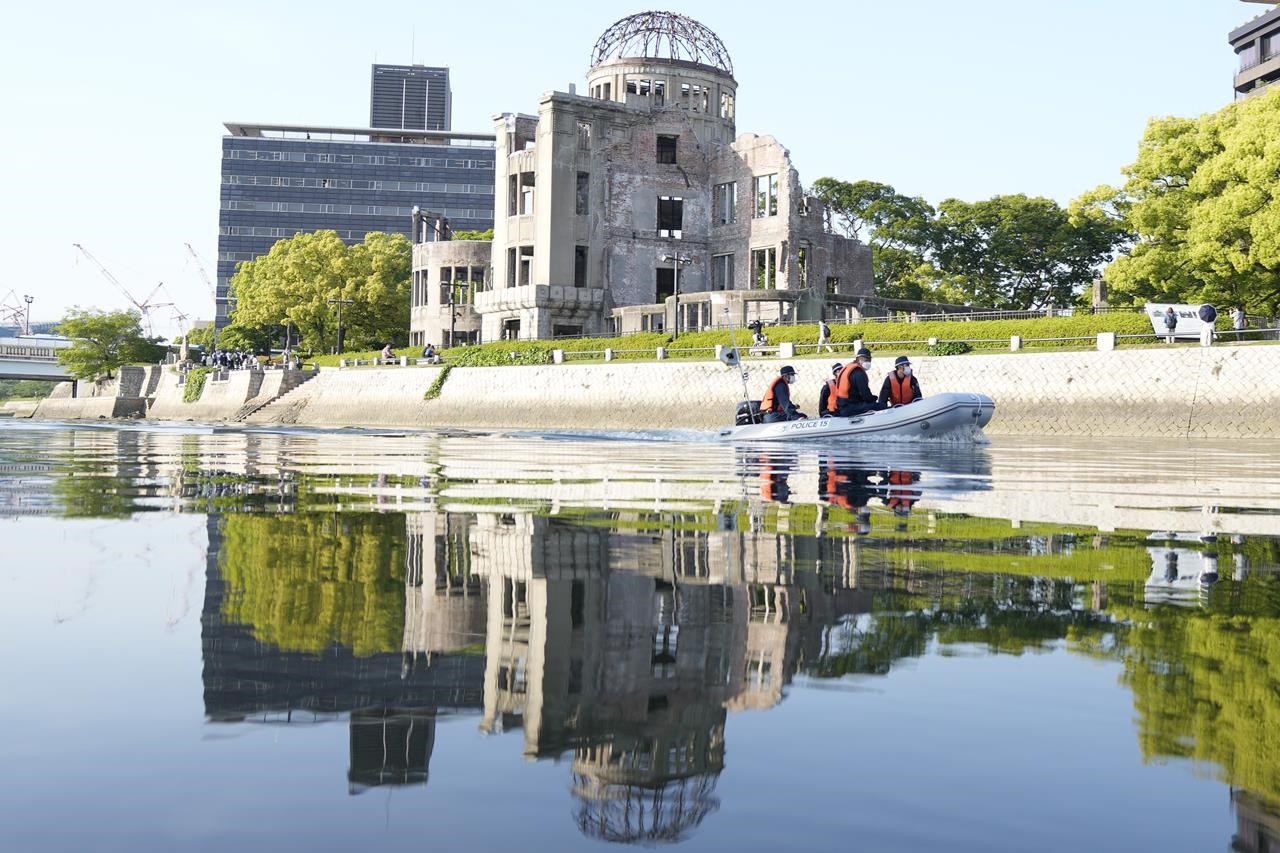
The leaders of the world’s most advanced democracies will meet in Hiroshima today to discuss the ongoing conflict in Ukraine and emerging threats from China. The meeting’s location has placed nuclear arms at the top of the agenda, with the Hiroshima Peace Memorial Museum looming close by. The museum reminds visitors of the risks of nuclear war with dozens of exhibits, including timepieces stopped at 8.16am, the exact timing of the atomic bomb that was dropped on the city in August 1945 by a US Army Air Force B-29 bomber. Global risk monitors, the Bulletin of Atomic Scientists, states that the Doomsday Clock, an annual indicator of how close the world is to nuclear disaster, now stands at 90 seconds to midnight, an unprecedentedly dangerous rating; Russia’s war on Ukraine is cited as a major cause, together with Chinese weapons building, and a North Korea testing nuclear capable missiles.
The Group of Seven (G7) summit has begun in Hiroshima, with world leaders including Japanese Prime Minister Fumio Kishida, US President Joe Biden and British Prime Minister Rishi Sunak addressing the escalating conflict in Ukraine, Amid the talks there has been a spate of Russian air raids on the Ukrainian capital, Kyiv. The G7 is also expected to outline a collective strategy on China’s assertiveness, particularly in areas such as military expansionism and human rights violations in Xinjiang province, as well as discussing the risks of nuclear proliferation posed by North Korea and China.
The G-7 meeting began recently with world leaders arriving in Hiroshima. The leaders are expected to discuss how to deal with China’s expanding military and growing assertiveness, amidst concerns that it could try to seize Taiwan by force. Meanwhile, Russia’s war in Ukraine’s ongoing conflict is also high on the agenda. The summit was begun by Japanese Prime Minister Fumio Kishida meeting with US President Joe Biden after his arrival at a nearby military base, while security was tight throughout the city.
US President Joe Biden and Japanese Prime Minister Fumio Kishida have praised the progress of their countries' bilateral relations after discussions in Hiroshima ahead of the G7 summit. The two leaders spoke of the strength of their alliance in the face of challenges posed by Russia, Ukraine, and China, with Biden praising Japan's robust response to the increasingly complicated regional security situation. They discussed a range of issues, including the joint response to the conflict in Ukraine, bilateral ties with South Korea, and the importance of a solution regarding cross-Strait issues with Taiwan. Both parties expressed their commitment to building broader economic ties. Cooperation was pledged on sectors such as quantum computing, biotech, and energy. However, the senior Japanese official reporting on the talks stated they did not single out China, Tokyo's largest trading partner, in discussions surrounding supply chain resilience and the restriction of advanced technology exports to Beijing.
The Chinese view towards the Ukrainian conflict is full of ambivalence and omissions, say Ukrainian observers. Though Xi Jinping has remained the only world leader to maintain ties with Vladimir Putin, he has yet to denounce Russia for its actions in the Ukraine. While he now appears to be trying to add a peacekeeper’s feather to his cap, observers suggest he may be trying to freeze the war on Russia’s terms, allowing the country to replenish its arsenals, train more troops and switch to wartime mode, rather than offering any meaningful peace process. However, with China increasingly relying on Russia for oil, gas, coal and timber exports, and Russia trying to find new markets as sanctions are deployed by the West, the “junior” part in the alliance with Russia is becoming increasingly tough to maintain. Meanwhile, in Ukraine, supplies of Chinese drones and microchips have begun, but there is growing speculation that China may begin to provide Russia with weapon supplies if Ukraine’s President rejects China’s peace offering.
Technology companies, including email provider Proton, review site Yelp and pricing service Kelkoo, have urged US public officials to reject industry rivals’ attempts to “overrule democratically passed anti-monopoly laws” in the Indo-Pacific negotiations currently taking place. The coalition has voiced concern that big tech companies are trying to “block policies that would prohibit their anti-competitive practices”. They claim that a “lack of transparency” about the talks has led to the views of some digital firms unfairly dominating discussions, with small and medium tech firms largely excluded. Such moves have prompted the involvement of lawmakers from both sides of the US political aisle, as well as consumer advocacy groups, but business groups have said that digital trade provisions would ensure that other countries don’t block US-generated data flows. Meanwhile, the tech industry group that includes Amazon, Google, Apple and Meta, amongst others, has called on the administration to ensure its digital trade policies address potential overseas economic barriers for American tech companies.
Japan's Prime Minister Fumio Kishida has invited the world leaders of five African countries to join him at this week's G7 summit in Hiroshima to discuss the global economy and other issues of global importance. The second priority for Kishida is to strengthen the G7's outreach to the "Global South", building trust with these countries will require more extensive efforts to listen to and address their concerns, he said. Kishida also wants to demonstrate the G7′s strong determination to uphold the free and open international order based on the rule of law, affirming their commitment to uphold the principles of the UN Charter.
World Leaders Land in Hiroshima for G7 Meeting, With Ukraine War High on Agenda
Diplomat
23-05-18 16:50
Leaders from the G7 countries have arrived in Hiroshima for a meeting where Russia's war in Ukraine is expected to be high on the agenda. Ahead of talks with Prime Minister Kishida Fumio on Thursday, US President Joe Biden remarked: "When our countries stand together, we stand stronger, and I believe the whole world is safer when we do.” Discussions regarding the battlefield in Ukraine and the state of play on sanctions are expected. Meanwhile, G7 leaders and guests from countries are also expected to discuss how to deal with the military buildup and growing assertiveness of China.
Canadian Prime Minister Justin Trudeau's visit to South Korea represents a new point for the two nations, especially on trade and energy. Last month, both countries agreed to share advanced tech and data, as they plan on working together on a variety of initiatives to enhance their positions at home and abroad. South Korea is Canada’s seventh largest trading partner, with a two-way merchandise trade of $21.9 billion. It is also the world’s 10th largest economy, and South Korea’s economic prowess, along with the fascination for Korean pop culture, commonly known as “Hallyu,” have garnered interest around the world.
The leaders of the G7 industrialised nations have gathered in the Japanese city of Hiroshima for their annual summit. The meeting is expected to focus on the West's relationship with China, as well as Russia's war in Ukraine and the ongoing global economic uncertainties. To avoid possible “economic blackmail”, G7 leaders are expected to diversify their supply chains and markets, but are not aiming to “decouple” from China. In terms of military activity, discussions will include China’s behaviour in the South China Sea and the Taiwan Strait, yet Robert Ward, director of geo-economics and strategy at the International Institute for Strategic Studies, believes that the G7 nations are unlikely to agree on specific measures to counteract China's power in the Indo-Pacific.
Former National Security Advisor to President George W. Bush, Stephen J. Hadley, will join the Center for Strategic and International Studies (CSIS) for a conversation about the evolution of US foreign policy in Asia over the last decade. Topics expected to be covered include diplomatic strategy in Asia, nuclear proliferation in North Korea and competition with China.
Leaders of the world's seven most powerful democracies will attend the G7 summit in Hiroshima to discuss issues including economic policy, security, climate change, energy and gender. The G7 leaders will also host discussions with leaders outside the G7, such as Vietnamese Prime Minister Tan Dung, to address the rise of developing nations. Chinese military aggression from North Korea and Russia will be among the topics to be covered. Pledges of continuing support for Ukraine will see Ukrainian President Volodymyr Zelensky join the session via the internet, and there will also be a focus on Beijing's increasing threats against Taiwan.
Leaders of the Group of Seven advanced economies (G7) have discussed how to build support for a “strong response to economic coercion” by China. Ahead of a summit in Hiroshima, US officials predicted a joint response from all countries, which will involve protecting technologies in areas of national security. The EU has also been seeking to create support for a strategy against economic coercion, to “derisk” rather than disconnect from, China. However, all seven members of the G7 require a positive relationship with the world’s second-largest economy. The US imported goods amounting to $537bn from China last year, while its businesses invested nearly $120bn in China. EU investments in China over the course of two decades amounted to over $140bn. In the face of criticisms from the US, China’s Foreign Ministry spokesman Wang Wenbin argued that the US was the chief culprit in the coercion of China.
Hiroshima hosts this year’s Group of Seven summit as a symbol of the need to realise a world without nuclear weapons, says Japanese Prime Minister Fumio Kishida. The city is a reminder to the international community of the devastating effects of using nuclear weapons. Kishida stated that it is important to “send out a strong message” against nuclear weapons, but faces an uphill battle as North Korea and Russia threaten to use nuclear weapons and have strengthened their nuclear weapons programmes, whilst other nuclear powers including the US, China, India, France, Pakistan and Israel have not indicated plans to reduce their nuclear arsenals. The leaders are expected to visit the Hiroshima Peace Memorial Museum during the summit.
Japanese Prime Minister Fumio Kishida, who was previously the Foreign Minister, spoke about his vision of a world without nuclear weapons seven years ago in Hiroshima and called this his dream. But as he returns to the city to chair the G7 summit, he admits it is a far-off prospect and disarmament remains central to his political career. As well as the threat of nuclear proliferation, Japan could be dragged into approaches to Taiwan if a conflict is sparked between Beijing and Washington, a concern experts say will be a key focus of the summit.
Former National Security Advisor to President George W. Bush, Stephen J. Hadley, will join the Center for Strategic and International Studies (CSIS) for a conversation about the evolution of US foreign policy in Asia over the last decade. Topics expected to be covered include diplomatic strategy in Asia, nuclear proliferation in North Korea and competition with China.
G7 leaders gather on China’s doorstep to seek unified response to Beijing’s threat
CNN
23-05-19 04:17
The G7 summit, which has convened in Hiroshima, will focus on the dominant issue of China and Russia, with the G7 nations seeking to present a united approach to China’s increasing economic and military might and Russia’s activities in Ukraine. The economic security of the G7 nations is of particular concern in the face of China’s assertive demonstrations of economic coercion. China has already bolstered its ties with Russia, and is attempting to drive a wedge into the transatlantic alliance, which has concerned officials in Washington. Yasuhiro Matsuda, an international relations professor at the University of Tokyo, suggests that the G7 meeting constitutes a platform for the leaders to discuss how to deal with these issues. However, a different approach is required considering members’ different concerns and relationships with Beijing and in view of their strong economic links to China. It remains to be seen how the summit will help to recalibrate the G7 approach toward China, but it is anticipated that leaders will work toward diversifying supply chains and reducing reliance on China.