IMF: Ghana intends to agree debt rework MoU with official creditors before November
Reuters
23-05-18 15:59
Ghana has secured a $3bn, three-year rescue loan from the International Monetary Fund (IMF), which officials claim will help the African country to climb out of its “worst economic crisis in a generation”. Ghana’s Finance Minister Ken Ofori-Atta and IMF Mission Chief Stephane Roudet, have said the fund will be used “in managing our expenditure and increasing our revenue”. An agreement with official creditors is expected to be in place before the first IMF programme review, in November; this could trigger a payout of $600m.
Analysts have expressed surprise at the recent 2% bounce in the US dollar, given that greenback was widely expected to continue its decline. The general consensus was that cooler inflation and potential interest rate slowdowns would make for a lower US currency. Analysts have put the bump down to increased safe-haven demand revolving around worries about US debt ceiling negotiations, the vulnerability of US banks and uncertainty over the global economy's outlook. Traders currently expect the US Federal Reserve to cut interest rates significantly later this year due to a falling economy, something which Alvin Tan, head of Asia FX strategy at analysts RBC Capital Markets, doubts will happen, stating there is "a chance that US interest rates could grind higher." The net short bets of hedge funds and other speculators against the dollar amounts to $14.56bn, the largest position since mid-2021, which Chester Ntonifor, FX strategist at BCA Research, suggested rendered a potential rebound.
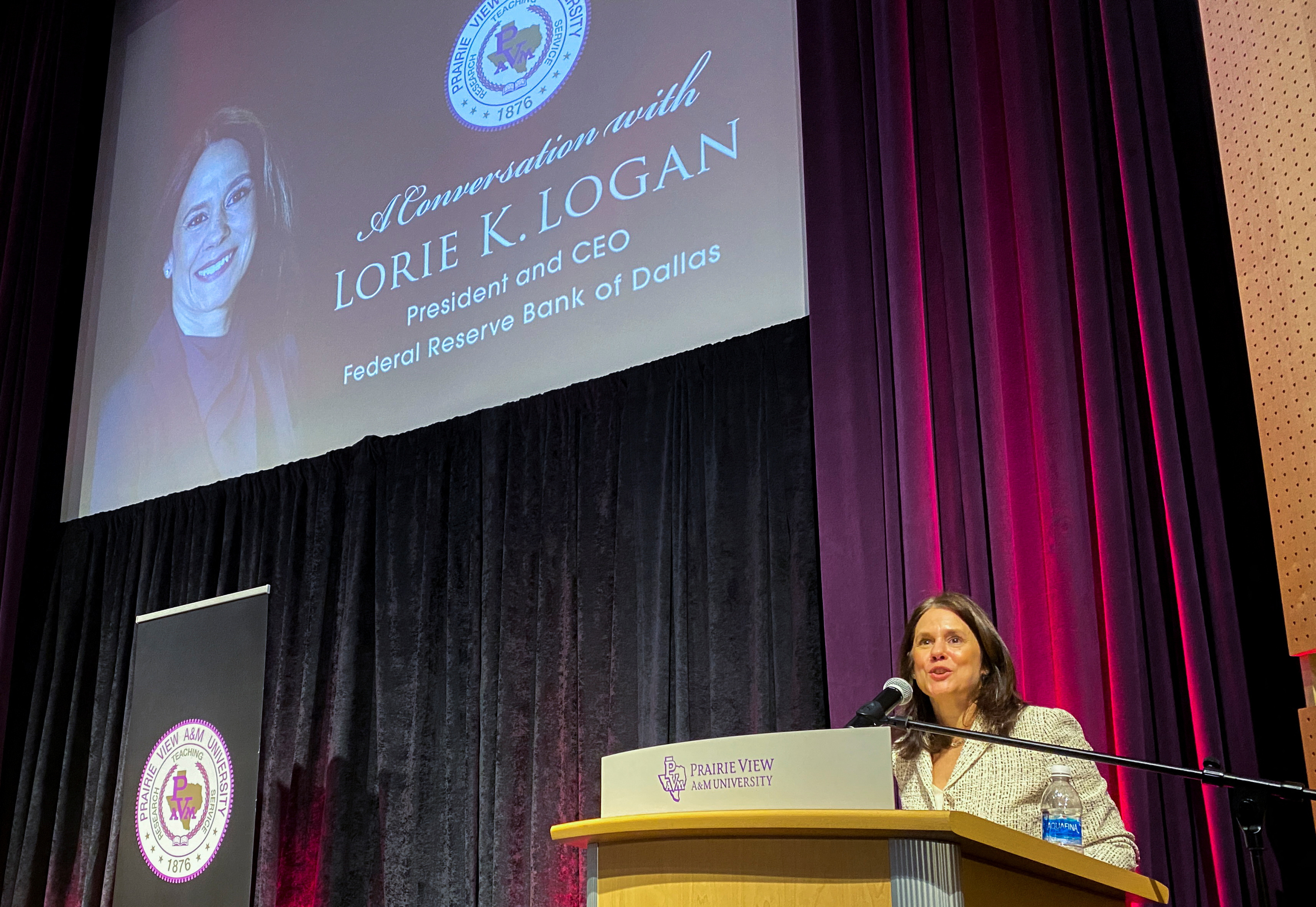
Lorie Logan, president of the Federal Reserve Bank of Dallas, has said that high inflation shows no signs of cooling down, and it doesn't look like the regulator will be taking a break from interest-rate hikes in June either. Logan added that she believes rate increases are necessary to bring inflation down to the 2% level, but that she also understands the dangers of raising rates too quickly. She also warned banks to prepare for any potential liquidity issues during periods of stress.
Stronger-than-expected gross margins shown in the recent earnings reports of consumer-facing firms such as PepsiCo, Kraft Heinz, and Target can be attributed to lower input costs and inventories, as well as extended price hikes. This is being underpinned by a strong labour market and consumer spending. While investors saw a dip in margins due to high inflation and interest rates, quarterly margins for consumer discretionary components of the S&P 500 index are expected to increase year-over-year for every quarter this year, according to Refinitiv data.
Gold is emerging as the top investment choice for professionals and retail investors as they consider what to do in the event of a US default. Analysts at RBC Capital have indicated that “gold looks like one of the few likely candidates that would bear the burden of resulting market flows from default anxiety.” Data from the World Gold Council shows that central bank purchases of gold hit a record high in Q1 2022, while LBMA-accredited precious metals refiners have reported seeing far higher volumes than usual of large bars. Other investments suggested include the yen, the Swiss franc, and high-quality international equities.
Sam Zell, famed for his opportunistic approach to real estate investing and questionable decisions in the media industry, died on 27 July 2021. He entered the world of real estate while still studying law and became one of America's great contrarian investors, scooping up distressed properties and refurbishing them. He was also a major philanthropist, supporting organisations including the Museum of Contemporary Art Chicago and Invest for Kids, which assists non-profit groups serving impoverished children. His foray into media saw him publish magazines such as the Chicago Tribune and broadcast television networks in the US.
Debt-ceiling talks in the US could improve China’s image as a destination for foreign investors, according to analysts. While costs and strict Covid-19 controls have caused China’s sheen to slip in recent years, the country could reap the benefits of US budget negotiations that aim to prevent a global credit crisis. If the US Congress fails to reach a deal to raise the current $31.4tn debt ceiling by 1 June, the likelihood of a default would cause “significant volatility” and hit global financial markets, according to a commentary by Zhang Zhiwei at Pinpoint Asset Management in Hong Kong.
The ongoing AI debate is like the early stages of a discussion over ESG assets, according to Morgan Stanley. In ESG, investors divided their portfolios into ESG-positive and ESG-negative narratives before reassessing their holdings' terminal growth in a new paradigm. Emerging AI investments may undergo the same bifurcation process, with questions around earnings expectations, margins assumptions and terminal growth. A comparison to the rise of electronic vehicles was initially favourable, but AI's disruption is wider. Morgan Stanley clients would like to simplify the prediction process down to point conversations about tangible assets versus intangibles.
If the US fails to reach an agreement to raise the debt ceiling, financial markets will experience a global "black swan" event that would make the 2008 crisis look insignificant, with it causing a downturn that would affect the whole of the UK, according to Simon French, chief economist at investment bank Panmure Gordon. It would also lead to a sharp drop in the value of the dollar, which would make food and fuel more expensive and raise the cost of living for millions of consumers, as well as make British mortgages more expensive and increase unemployment.
Trading Central has analysed the top US-listed stocks in the technology, communications, and consumer discretionary sectors generating five-year EPS growth of at least 10% and stocks with debt to equity ratios of one or lower. It screened just 10 stocks as a result. Analog Devices, a semiconductors firm, made it to the top with a 7.32 rating on Trading Central's stock rating methodology. PulteGroup, a US homebuilder, had the highest five-year average EPS growth rate at 50.2% and impressive YTD and one-year performances of 52.6% and 66.9%, respectively.
Japan's Nikkei share average has hit its highest point since August 1990, the era of the country's "bubble", due to strong earnings and optimism over a US debt ceiling deal. The index reached 30,924.57 after smashing the 30,000 psychological threshold on Wednesday, while the broader Topix extended its rise. The rally has been driven by a number of factors, including a weaker yen amid belief the Bank of Japan will maintain stimulus spending, foreign buying facilitated by greater investment by Warren Buffett, and a consumption boom post-COVID.
The Limit, Save, Grow Act was passed in the House of Representatives with a slim 217-215 majority. The legislation would reduce the budget deficit by an estimated $4.8tn over 10 years, and includes the “REINS Act” which would subject regulatory agency rulemaking to stricter congressional review and approval processes if proposed regulations would increase costs to individuals or businesses significantly. The deficit reduction is paired with an up to $1.5tn increase to the current $31.4tn statutory debt limit to avoid an interruption in Treasury Department checks. While it is unlikely that the Senate will pass the bill in its current form, the House passage helps push President Joe Biden to the negotiating table and address the nation's financial woes meaningfully. If it were to pass, the legislation's biggest winners are taxpayers who avoid a future tax burden, and consumers can expect inflation to drop, reducing the costs of goods and services. The IRS would be a loser, with taxpayers getting back $70bn of unspent bonus funding. Future generations would benefit from a reduced federal debt burden, and federal bureaucracy would be limited. Untaxed corporations are set to lose the most, as the bill scales back new energy tax breaks enacted by the previous Congress, returning most pre-existing green tax credits to pre-2022 and levelling the playing field of corporate taxes. Small businesses would benefit from a more stable atmosphere, while doctors, lawyers, and advanced degree holders who have not paid their bills would be the biggest losers, with a change in borrower income calculation methods being proposed.
Environmental, social, and governance (ESG) goals set for corporate directors by certain groups are raising important concerns, argues Robert H. Sitkoff in an op-ed for the Harvard Law School Forum on Corporate Governance. Corporate governance is “remarkably vague”, and there is no proper democratic process behind these goals, says Sitkoff. While ESG initiatives may seem to appeal to certain investors, who are asking companies for more green disclosures, the costs of such initiatives means capital providers may never take new businesses public as they may not be able to check ESG boxes. This, in turn, limits investment options for average investors while professionals and high-net-worth investors continue to invest privately.
ESG risks damaging markets and the social order by incentivising exclusionary and economically inefficient behaviour. Moreover, if ESG-focused capital departs from disfavoured firms, arbitrageurs could unlock value in them. A possible outcome is therefore worse overall environmental outcomes and the departure of capital to nations without ESG burdens. In addition, ESG demeans the value of property rights within the corporation, as ESG raises the question of what is owed to its claimants and shareholders. Property is defined as a bundle of rights, from the right to exclude, to dispose of, to derive income from, meaning that when corporate assets are diverted- without express shareholder approval- to ends that do not increase corporate value, shareholders’ return on their investments are diluted without their consent, resulting in theft.
Sitkoff’s argument is that stakeholders arguing against ESG not realising their self-interest when participating in decision-making, harms shareholder return on investments in the ESG initiatives. Shareholders, according to Sitkoff, have the right to retain a full return on their investments as ESG risks damaging struggling firms and altering financial options of average investors while providing private benefits to those who have already invested.
Indian shares are expected to open higher on Friday, buoyed by optimism that the US will soon reach a debt ceiling deal, according to analysts. Meanwhile, foreign investors have continued to buy domestic equities. India's NSE stock futures, listed on the Singapore exchange, were up 0.17% at 18,209. The benchmark Nifty 50 has declined by 1% for the week so far, and analysts suggest that the benchmark, which settled at 18,129.95 points in the previous session, will find support at 18,050 and resistance at 18,350 levels. Investors will also await quarterly results of companies including JSW Steel, Power Grid Corporation of India and food delivery firm Zomato.
Japan's Nikkei share average has reached its highest level since August 1990 due to strong earnings, optimism over a US debt ceiling deal and the foreign investment, including from Warren Buffett. The benchmark index hit 30,924.57, while the Topix reached 2,171.37. The rally has also been powered by the perception that the Bank of Japan will keep stimulus for longer and a post-COVID revival in economic consumption. However, investors remain cautious about the potential for the Nikkei to become overheated, with some stocks, such as chip-related shares, sufferings losses during the rally.
China’s economy is growing again. So why are investors getting out?
CNN
23-05-19 07:34
Chinese companies around the world have lost about $540bn in value since China released figures on its first-quarter economic output on 18 April. Analysts said investors have trimmed their exposure to China amid the combined pressures of rising geopolitical tensions, uncertainty over the prospects for the Chinese economy and Beijing’s crackdown on consulting firms. China’s Nasdaq Golden Dragon China Index fell by almost 5% since 18 April. Hong Kong’s Hang Seng Index also lost 5%, while the Shanghai Composite Index and the Shenzhen Component Index fell by 3% and 6.5% respectively during the same period. Meanwhile, the yuan, a barometer of investor sentiment, has fallen over 2% during April. Concerns are focused on the country’s “fundamental investability", according to Brock Silvers, CEO of Hong Kong-based Kaiyuan Capital. This refers to Chinese policy risk and geopolitical worries, including tensions between China and the US and Beijing’s clampdown on foreign consultancies.
Japan's Nikkei benchmark index rose to the highest level since the country's "bubble" era during August 1990. The index advanced on higher earnings amid an economy showing signs of recovery, optimism over a US debt ceiling deal and a weaker yen supported by the prospect of the Bank of Japan giving a longer timeline for its stimulus. Japan's stocks went through an overall excellent earnings season and attracted increased foreign investment, including from Warren Buffett. The TSE also pushed for better corporate governance. Despite the optimism, analysts have said there are some warning signals, including concerns the market may be overheating.
Japanese stocks have been climbing, with the 225-issue Nikkei Stock Average at its highest level since August 1990, as the possibility of the US avoiding default and corporate governance reforms boosting valuations rally investor interest. Both the Nikkei and Topix indexes are set to complete their sixth-straight week of gains. Strategists at Goldman Sachs, Macquarie and Morgan Stanley have been optimistic about the prospect of a bull run, although the Topix index remains nearly 25% below its 1989 peak.
Chinese technology stocks are continuing to struggle despite recent strong earnings results from the industry's leading companies. Tencent, China's most valuable firm, reported its fastest revenue growth in over a year, while the country's internet search leader, Baidu, announced better-than-expected sales results on Tuesday. However, shares have declined by more than 2.5% for Tencent and 2% for Baidu, reflecting the broader malaise that is affecting Chinese equities. Investors remain concerned over a slowing economic recovery that is not receiving government policy support, as well as the ongoing trade spat with the US.
China's economy is falling into a "confidence trap", with anxiety elevated after three years of heated tensions with the West, President Xi Jinping's punishing regulatory campaigns, and strict Covid-control policies that have left a record number of young people unemployed and undermined commerce, warns Bloomberg. China has slipped into a confidence trap for consumers, businesses, and investors, leading to increasing calls for greater forceful stimulus measures. However, investors have shown little tolerance for negative news and only a meaningful policy response will give companies and consumers long-sought clarity to spend.