The United States Department of the Treasury has warned that it could run out of funds to cover the country’s bills by June 1, heightening fears over the threat of a possible US default. Republican lawmakers are looking to cut social program spending, such as food assistance, in order to raise spending limits. Democrats have said that the situation is particularly galling as the same Republican lawmakers raised spending limits with little resistance when their party was in power. A default in US debt would stump the global economy; leading experts to call for a solution.
Canada is making the same mistakes as Argentina and South Africa, said George Athanassakos, professor of finance and holder of the Ben Graham Chair in Value Investing at the Ivey Business School, University of Western Ontario. He added the government was discouraging entrepreneurship and wealth creation by favouring taxing corporations and adding regulatory impediments to corporate activity. Canada, he said, had a productivity problem that has gotten worse over the past decade and believes the government should channel its focus into industries such as robotics, cybersecurity and additive manufacturing.
The US and Germany led global economic officials in a campaign to impose a cap on Russia's oil prices on the global market. The G7 nations were brought on board in June 2021. The cap appears to be diluting Moscow's attempts to sell oil at prices higher than leading contemporaries, resulting in falling revenues that are increasingly putting pressure on the country's spending effort in times of trouble. Nonetheless, some are sceptical about the long-term impact and efficacy of the tactic, stating that the data is unreliable and easily exploitable, with some concerned that claims of success have made the Biden administration reluctant to adjust their tactics, leading to consistent evasion and a consistent supply of crude oil at a premium. Either way, this policy is a significant escape hatch to removing Russian oil from the global market and deterring buyers from making deals with the country while highlighting the financial gain and market disruption nations need to consider when associating with Russian oil. Emerging markets and lower-income economies have seen the most significant benefit of reduced oil prices amidst an ever-changing global market.
The Canadian housing market is booming again after only a year of pandemic-inspired price slumps. The national average house price has surged by almost 17% this year, climbing by 5-6% across numerous regions including the GTA. The current market recovery is strong, driven by record levels of immigration, high levels of household formation, and low rates. However, buying now means putting oneself at the mercy of the seller's market, with limited listings and upward pressure on prices. The recovery fundamentals are sound, but waiting for favourable market conditions may be a distant prospect.
Loblaw looks set to compete with Canadian big-box rivals by institution a “store-in-store” pilot that will sell major household appliances at a number of its large Real Canadian Superstore locations. The goal of the initiative, which begins Thursday, is to turn the Superstore into an emporium for nearly all domestic needs, from groceries to white goods. Loblaw, the largest grocery retailer in Canada, already sells small appliances such as toasters, blenders and barbecues. The appliances will be sold in kiosks that are 1,900 square feet or larger and will be run in partnership with Toronto-based Canadian Appliance Source. The move follows Walmart, which has been selling appliances for a few years, but with little impact on major Canadian chains. The larger Superstore shops, some of which measure 164,000 square feet, offer the space to display a mini-showroom such as the one instituted by Loblaw.
Statistics Canada has warned sticky inflation could be difficult to manage with rising mortgage costs, as more Canadians renew their mortgages at higher interest rates. The Consumer Price Index (CPI) reached 4.44% higher than it was a year ago, with mortgage interest and rent being the main driving contributors. As mortgage costs are slowly filtered into the CPI, they will continue to be included in inflation, discouraging the country's central bank from lowering interest rates. Ron Butler, a mortgage broker, said that if the Bank of Canada was to increase the prime rate by another 25 basis points "it would drive up mortgage costs further and we'd be in the exact same situation". Another factor contributing to the sticky inflation is the extending of amortization periods by homeowners, which keeps monthly costs in check but comes with high-interest rates for a more extended period.
Montana Governor Greg Gianforte has signed a bill banning China-based TikTok from operating in the state due to concerns over alleged Chinese surveillance. This makes Montana the first US state to take such a step. TikTok has faced scrutiny and allegations of security risks in the US. In November last year, FBI Director Chris Wray said the short-video app posed a risk to national security due to the fact Chinese companies were required to do “whatever the Chinese government wants them to in terms of sharing information or serving as a tool of the Chinese government". Meanwhile, US lawmakers have said that the Chinese government, which controls tech firm ByteDance, which owns TikTok, can force the parent company to hand over user data. The US is not alone in its concerns over the app, with India having moved to ban TikTok over security issues in 2020.
Deutsche Bank has agreed to pay $75m to settle a lawsuit claiming the German lender failed to see evidence of sex trafficking by financier Jeffrey Epstein when he was a client. A woman only identified as Jane Doe sued the bank in federal district court in New York and sought class-action status to represent other victims of Epstein. One of the law firms representing women in the case, Edwards Pottinger, said it believed it is the largest sex trafficking settlement with a bank in US history. Deutsche Bank noted that it had invested more than $4.3bn to bolster controls against financial crime.
Former Bank of England Chief Economist Andy Haldane has warned that the UK risks recession if the central bank continues to push ahead with interest rate hikes. Urging the bank to pause its current run of increases in borrowing costs, Haldane added that more interest rate hikes would pose significant risk to the economy. He also criticised both Labour and Conservative parties for a lack of ambition, saying the UK could borrow and spend more given a benign economic environment.
Analysts have expressed surprise at the recent 2% bounce in the US dollar, given that greenback was widely expected to continue its decline. The general consensus was that cooler inflation and potential interest rate slowdowns would make for a lower US currency. Analysts have put the bump down to increased safe-haven demand revolving around worries about US debt ceiling negotiations, the vulnerability of US banks and uncertainty over the global economy's outlook. Traders currently expect the US Federal Reserve to cut interest rates significantly later this year due to a falling economy, something which Alvin Tan, head of Asia FX strategy at analysts RBC Capital Markets, doubts will happen, stating there is "a chance that US interest rates could grind higher." The net short bets of hedge funds and other speculators against the dollar amounts to $14.56bn, the largest position since mid-2021, which Chester Ntonifor, FX strategist at BCA Research, suggested rendered a potential rebound.
The United States and Taiwan have reached a modest trade agreement as part of Washington's support for Taiwan and its demands from China. The deal is the first under the US-Taiwan Initiative on 21st Century Trade and is expected to set the stage for a more significant agreement. The agreement aims to cut red tape at customs, reduce waiting times for US businesses in Taiwan and commits to adopting measures to combat bribery and encourage more trade with small to medium-sized enterprises. There is widespread bipartisan support for Taiwan in Washington, and the island country remains a prosperous democracy that split from China in 1949.
The Loaves and Fishes food bank in Nanaimo, British Columbia, is grappling with an excess of donations as it attempts to meet growing demand for its services. Rather than scarcity, the group suffers from a surfeit of food recovered from retailers who would have otherwise disposed it. The British Columbia government has announced $7m in funding to help build a 25,000 square foot warehouse for the non-profit. The facility is intended to allow the food bank to expand its offerings. The new facility will be sited on land leased at a negligible cost by the City of Nanaimo.
Dominic Barton, the former global managing partner of McKinsey, appeared before the Canadian House of Commons committee to answer questions about ties between the Canadian Infrastructure Bank (CIB) and McKinsey. One of the main talking points regarding the matter was newly released emails showing Zak Cutler, a McKinsey partner, organized a CIB workshop which included Barton, even though he had told Parliament that he had no contact with McKinsey during his brief tenure as Canada’s ambassador to China earlier this year. The committee had obtained the emails as evidence in an examination of McKinsey’s role in the creation of CIB, and there were concerns over the ties between McKinsey with Barton, who chaired the economic advisory council that recommended the creation of the CIB while at McKinsey. McKinsey has received over $100m in federal contract work since the Liberals formed government back in 2015.
Chinese comedian Li Haoshi has been fined $2.6m, and his employer has been fined $1.3m, after Li made a statement, deemed by authorities to be offensive to the Chinese military, in a live broadcast. Li was performing in Shanghai, where he quipped, in reference to two dogs that he adopted, that they "were able to win battles, with a first-rate style". The phrase Li was using alluded to propaganda descriptions of the People’s Liberation Army’s strength, and became associated with President Xi Jinping after he first used it. Critics argue that China's sensitivity to even the smallest slight against the military is symptomatic of increasing nationalism and authoritarianism in the country.
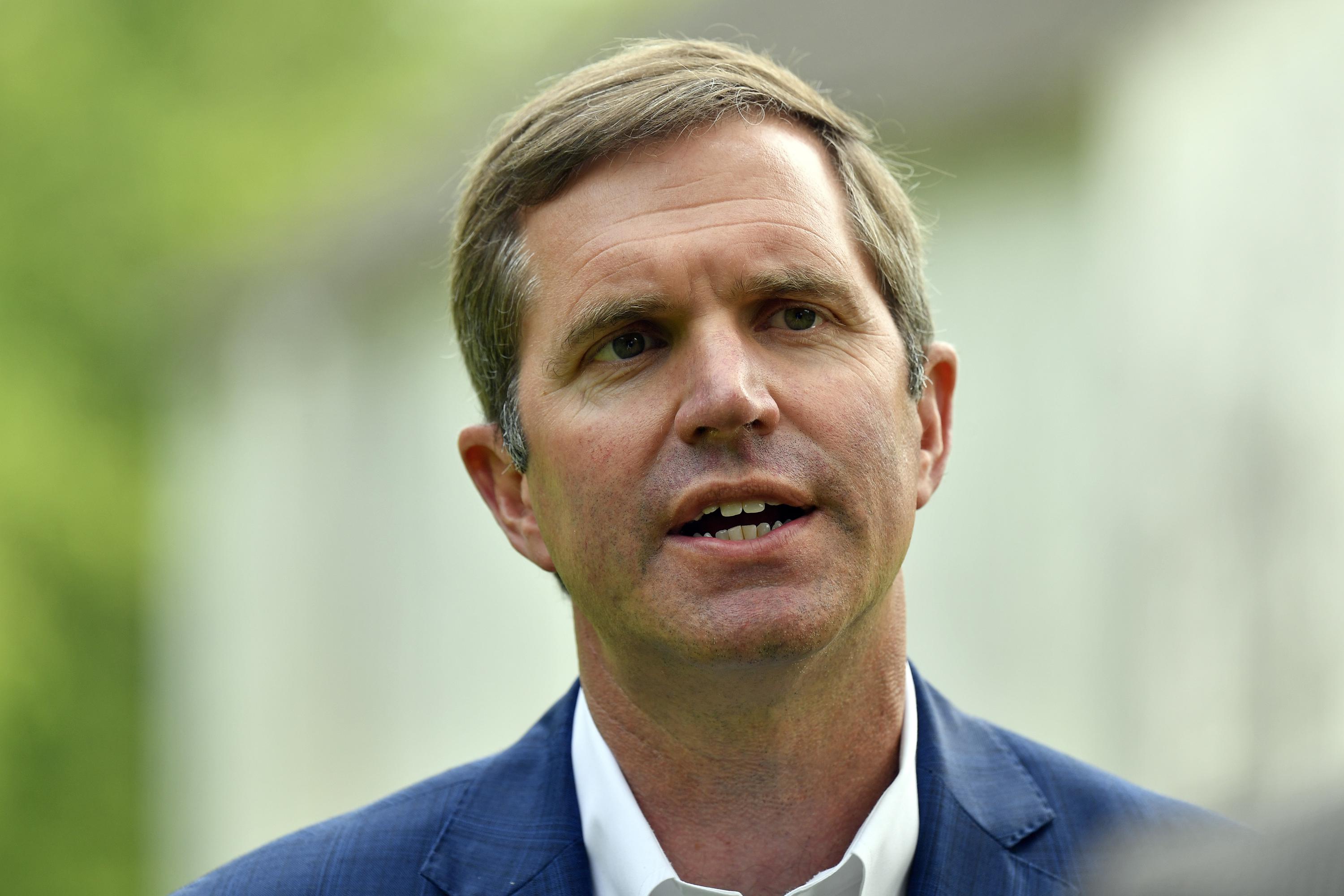
The US Midwestern state of Kentucky saw its lowest unemployment rate on record in April, with Governor Andy Beshear stating that "our record-breaking economy is what can happen when we put politics aside and focus on moving the state forward and doing what is best for all our families." The announcement coincided with his general election campaign for a second term as governor, which opponents are countering with slow labour participation rates and Republican-back pro-growth policies. By crediting policies that are not of his party's making, GOP members claim the governor is irresponsibly misleading Kentucky citizens.
Bank of Canada Governor Tiff Macklem has said that Canadians should not expect interest rates to drop back to the very low levels seen over the past decade. Macklem stressed that the era of historically low borrowing costs that followed the 2008/09 financial crisis is a thing of the past and that the surge in inflation over the past two years, followed by the central bank’s recent rate-hike campaign, have put the economy on a path on which borrowing costs are to be persistently higher. His comments suggest that the bank is prepared for an extended battle to combat inflation.
A non-profit in Vancouver's Downtown Eastside has received CAD 11m ($9m) in funding for a three-year programme aimed at teaching life skills to single room occupancy hotel tenants. The Downtown Eastside SRO Collaborative Society's training will include fire safety and lessons on overdose prevention, as well as incentives for community cleaning and repair work, and committee formation to prevent evictions. The programme is aimed at over 2,700 tenants in more than 50 privately-run buildings. The boost in funding recognises that the housing facilities are critical to supporting those in danger of becoming homeless.
The central bank Governor of Lebanon, Riad Salameh, has had a red notice issued for his arrest by Interpol after France put out an arrest warrant for him. The arrest warrant was issued as part of an investigation into whether Salameh embezzled hundreds of millions of dollars in public funds which he denies. Salameh is 72 years old and is part of the Lebanese political elite who are widely blamed for the economic crisis in the country. He has been targeted by a series of judicial investigations on charges such as fraud, money laundering and illicit enrichment. Salameh has repeatedly denied any wrongdoing and states that his wealth comes from his previous employment. Lebanon’s caretaker interior minister said on Friday that he would execute the red notice if the judiciary instructed him to do so.
The annual Atlantic Music Expo festival in Cape Verde provides an opportunity for independent musicians to network, improve their knowledge of the business and learn about digital rights. The event draws about 120 industry professionals who scout for new talent across a range of genres from West Africa and Europe. Only 1% of the more than $10.5bn collected in music royalties worldwide goes to African music organisations, said Solange Cesarovna, head of the local Cape Verdean Music Society (CSM). The group, launched in 2004, was created to help local artists claim and copyright royalties at home and abroad and monitors the works of musicians who perform across the continent to ensure they are properly paid. The CSM received its first money from Portugal last year and was able to pay €200,000 to Cape Verdean musicians in licensing fees, rights and other payments, up from zero a decade earlier.
While the number of Canadian job adverts fell 21% from the same period in 2022, the labour market remained strong in advance of the summer season, according to a report from employment website Indeed. May 12's posting numbers remained 30% higher than those of 2019, while Canadian summer season recruitments saw a 17% drop YoY, albeit from very high levels. Demand cooled off somewhat from last year, but low unemployment rates and an April enhancement of 40,000 part-time jobs indicate the overall market remains healthy, with hotels and restaurants struggling to fill positions.