Japan looks to raise annual $22 bln for childcare policy - Jiji report
Reuters
23-05-18 09:09
The Japanese Government intends to raise ¥3tn ($22.2bn) in funds annually for a childcare policy, according to reports. The policy was introduced earlier this year and aims at increasing childcare across Japan. There has been no clarity from the government over how the policy will be financed. The funds will be gradually increased over the next three years from fiscal 2024/25, with plans to secure the necessary amount by the end of the policy period. Prime Minister Fumio Kishida has confirmed that sales taxes on consumer goods would not be used to fund the policy.
A woman has combined work and leisure by working remotely from Marbella in Spain. Amy Irvine, head of digital at a PR company, had used her firm's policy of allowing anyone to work from anywhere in the world to work in Kielder Forest for her mother's birthday and in the coastal town of Whitby. She then asked her boss if she could work from Spain and was allowed to do so without any need to take time off as it became clear during the pandemic that remote working was a realistic option.
James Bullard, the president of the Federal Reserve Bank of St Louis, has backed further increases in US interest rates to forestall inflation. Bullard, one of the US central bank’s leading “hawks”, said that lifting interest rates again after 10 rate hikes since last year would act as “insurance” against price rises. His views contrast with Fed chair Jay Powell's recent stance, with other policymakers calling for a more cautious through to monetary policy.
South Africa’s foreign policy is in disarray and risks being pulled in different directions as the world order changes, according to analysis in the Financial Times. The paper questions whether officials know whether it has been exporting arms to Russia and argues the inconsistency of the ruling African National Congress stems in part from its nostalgia for the Soviet Union and from links between Russian oligarchs and the ANC. As non-western nations increase their global economic output, South Africa is poised at the intersection of external pressure from larger nations and internal debate over ideals and identity.
Policy 713 and kids: Fact checking 4 statements made by the premier
CBC
23-05-18 14:55
The Premier of the Canadian province of New Brunswick, Blaine Higgs, has questioned an education policy designed to protect LGBTQ children which prevents teachers from informing parents if their child changes their name or pronouns. Policy 713 was created in 2020 and aims to reduce discrimination against LGBTQ children in schools. Higgs has stated that the review is being conducted to restore parents’ rights by removing the “informal name or pronoun” provision. The policy requires teachers to be sensitive to their students’ needs and to support them when they attempt to use their preferred names and pronouns. The Premier’s comments have been criticized by some for placing children’s safety at risk. Statistics Canada reports that suicide is the second leading cause of death among people aged 10 to 24 in the country, with LGBTQ youth being three times more likely to attempt suicide than their non-LGBTQ peers.
President Biden has called for unity among allies at a G7 summit to support Ukraine and to counter China’s economic clout. However, complications arising from the risk of US default and curtailed international travel have made this task more difficult. Russia and Ukraine extended a wartime agreement that facilitates Ukraine’s exporting of grain and prevents famine in other parts of the world. Meanwhile, the Ukrainian President called on allies to provide greater air defence assistance following Russian airstrikes on the capital.
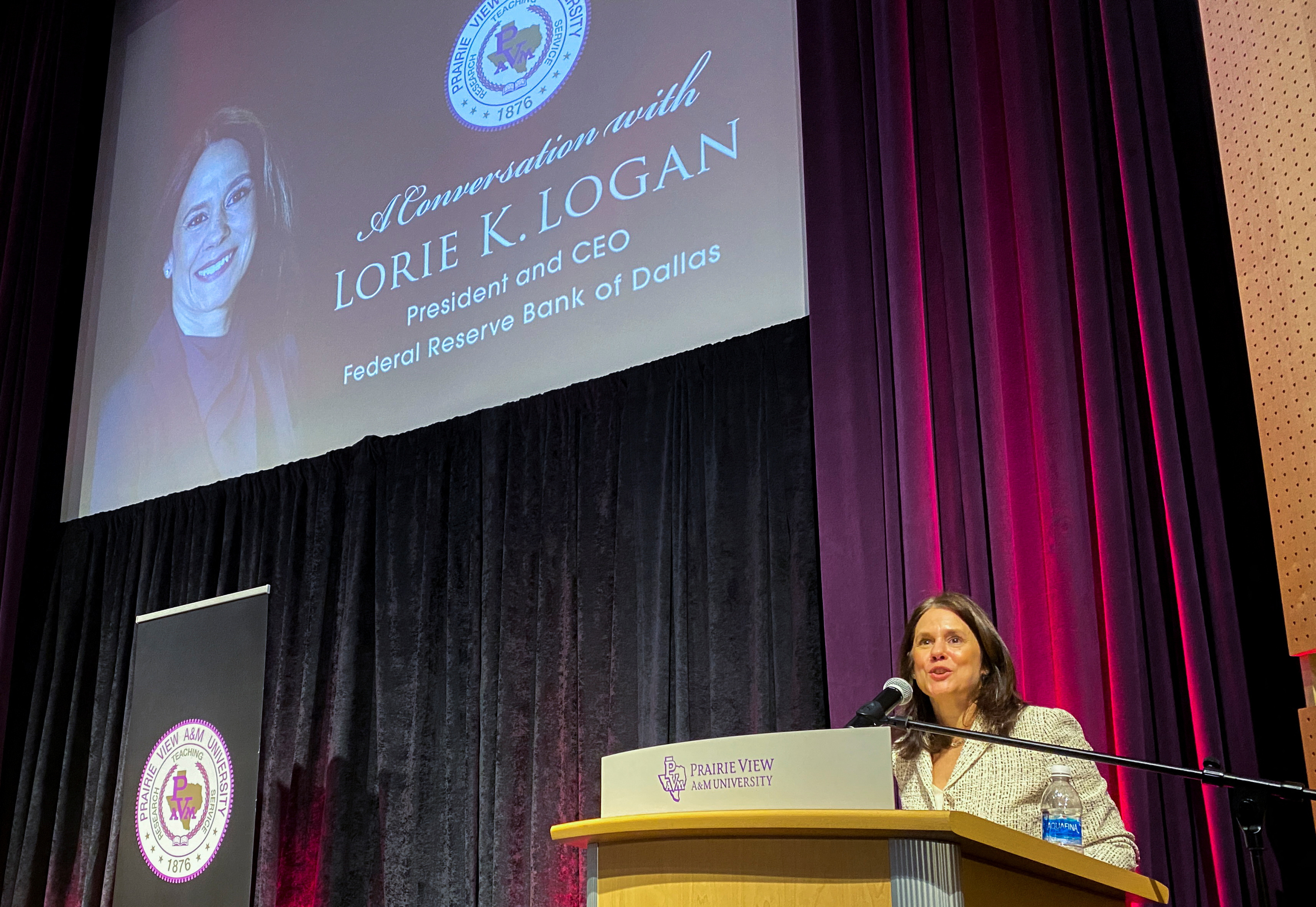
Lorie Logan, president of the Federal Reserve Bank of Dallas, has said that high inflation shows no signs of cooling down, and it doesn't look like the regulator will be taking a break from interest-rate hikes in June either. Logan added that she believes rate increases are necessary to bring inflation down to the 2% level, but that she also understands the dangers of raising rates too quickly. She also warned banks to prepare for any potential liquidity issues during periods of stress.
The North Carolina Senate has approved a two-year state government budget proposal, with the next step set to involve negotiations with house leaders over the coming weeks to determine a final spending strategy. While both the House and Senate proposals spend the same amount overall, the plans differ on areas such as income tax cuts and the oversight of medical facilities. Once finalised, the consensus bill will go to the desk of Democratic Gov. Roy Cooper, who has criticised the House and Senate plans, particularly regarding public education spending and policy.
Former National Security Advisor to President George W. Bush, Stephen J. Hadley, will join the Center for Strategic and International Studies (CSIS) for a conversation about the evolution of US foreign policy in Asia over the last decade. Topics expected to be covered include diplomatic strategy in Asia, nuclear proliferation in North Korea and competition with China.
The Center for Strategic and International Studies (CSIS) is hosting an event to commemorate Asian American and Pacific Islander Heritage Month. The event will include a keynote address by Ambassador Katherine Tai, the U.S. Trade Representative and Co-Chair of the White House Initiative on Asian Americans, Native Hawaiians, and Pacific Islanders. A panel discussion will also explore ways to counter AAPI hate and discrimination and its intersections with U.S. foreign policy in Asia, building on a previous event held in 2021. The event is being hosted by CSIS' Asia Program, Diversity and Leadership in International Affairs Project, and the staff-led Black, Indigenous, and People of Color Employee Resource Group.
Former US President Donald Trump has accused incumbent President Joe Biden of taking a "pro-China" stance as the issue of China's relationship with the US becomes a likely flashpoint in the 2022 presidential election. Trump has urged policies that would escalate the confrontation with China faster and further than Biden's current plans, accusing the president of keeping "a straitjacket that is certainly limiting their freedom of manoeuvre." Although there is now broad support for tariff policies against China, Biden's administration need to ensure they do not rope allies into a full-blown economic war to persuade them of the specific security concerns the tariffs address, experts warn.
China's National Emissions Trading System (ETS) is expected to play a significant role in helping the country achieve carbon neutrality by 2060. Based on a tradable performance standard, the ETS assigns each covered facility a certain number of emissions allowances based on its output and the government's assigned benchmark. A multi-sector multi-period general equilibrium model was designed to assess the potential economic, energy mix, and emissions impacts of different future policy options under China's National ETS over the period 2020–2035, by sector and province and in the aggregate. The model validated the advantages of an absolute cap for the ETS.
Former National Security Advisor to President George W. Bush, Stephen J. Hadley, will join the Center for Strategic and International Studies (CSIS) for a conversation about the evolution of US foreign policy in Asia over the last decade. Topics expected to be covered include diplomatic strategy in Asia, nuclear proliferation in North Korea and competition with China.
The Center for Strategic and International Studies (CSIS) is hosting an event to commemorate Asian American and Pacific Islander Heritage Month. The event will include a keynote address by Ambassador Katherine Tai, the U.S. Trade Representative and Co-Chair of the White House Initiative on Asian Americans, Native Hawaiians, and Pacific Islanders. A panel discussion will also explore ways to counter AAPI hate and discrimination and its intersections with U.S. foreign policy in Asia, building on a previous event held in 2021. The event is being hosted by CSIS' Asia Program, Diversity and Leadership in International Affairs Project, and the staff-led Black, Indigenous, and People of Color Employee Resource Group.
A new book by London-based podcaster, television presenter and infectious disease doctor Chris van Tulleken examines the role of synthetic food additives in mass-produced food. In "Ultra-Processed People", van Tulleken looks into “the modern nutritional landscape in which 'most of our calories come from food products containing novel, synthetic molecules, never found in nature’”. According to the author, UK citizens ingest four times as much additive weight on average each year than they do flour. While the additives themselves are not regarded as any kind of threat, their relationship with diets high in ultra-processed foods are considered deeply harmful. Van Tulleken also points out that, whilst extending shelf life and reducing production costs, synthetic additives also encourage excessive consumption. Though the additives have been in use for many years, the book calls for food companies to remove conflict of interest in science research on the subject as well as in the policy-making processes which surround them.
During the 2019-2020 election cycle, 93% of all political contributions from U.S. State Department employees and 96% of all political contributions from U.S. Agency for International Development (USAID) employees went to Democratic Party candidates or political action committees, meaning that America’s foreign policy apparatus is an arm of the Democratic Party. This division is further entrenched by the newly established political loyalty tests of the Biden administration and its focus on diversity, equity, and inclusion, which are feared to discriminate against patriotic Americans who are not on board with such leftist ideologies.
President Joe Biden’s Medicare proposals include old-fashioned tax increases and Medicare payment cuts, according to Devine D. Dr. S. who writes that in their 2021 report, the Medicare trustees stated their concerns. Dr. S. argues that increasing personal choice and intense competition between providers and plans should be implemented in Medicare reforms, building on the Medicare Advantage program's success. The writer also su.ggests that fixing the flaws in the payment system, expanding certain benefits that are not currently available, and allowing beneficiaries to access hospice coverage for end-of-life care could also lead to better reform of Medicare.
Former National Security Advisor to President George W. Bush, Stephen J. Hadley, will join the Center for Strategic and International Studies (CSIS) for a conversation about the evolution of US foreign policy in Asia over the last decade. Topics expected to be covered include diplomatic strategy in Asia, nuclear proliferation in North Korea and competition with China.
The Center for Strategic and International Studies (CSIS) is hosting an event to commemorate Asian American and Pacific Islander Heritage Month. The event will include a keynote address by Ambassador Katherine Tai, the U.S. Trade Representative and Co-Chair of the White House Initiative on Asian Americans, Native Hawaiians, and Pacific Islanders. A panel discussion will also explore ways to counter AAPI hate and discrimination and its intersections with U.S. foreign policy in Asia, building on a previous event held in 2021. The event is being hosted by CSIS' Asia Program, Diversity and Leadership in International Affairs Project, and the staff-led Black, Indigenous, and People of Color Employee Resource Group.
Call to curb stress at States as one in ten suffer
BBC
23-05-19 05:16
Around one in 10 employees of the States of Guernsey were signed off last year due to stress, with 135 of the 479 absences being work-related. There were 490 people signed off due to stress this year, with 434 in 2020. The island's policy and resources committee said addressing stress was a high priority. In 2021, 161 health workers were signed off due to stress. Royal College of Nursing representative Nick Dove said aged populations, lack of resources and discharge options meant stress was likely to get worse.