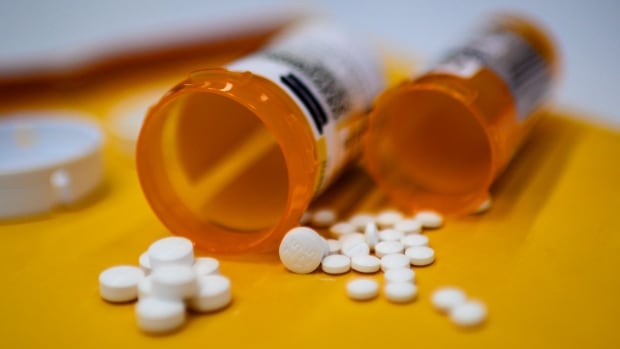
Singapore has executed another citizen for drug trafficking, the second in three weeks. The man was hanged after his last attempt to reopen his case was dismissed by the court, without a hearing. The man had been convicted in 2019 for trafficking around 1.5 kg of cannabis and had served seven years in prison. Activists and human rights organization have urged Singapore to stop executing prisoners for drug-related offences. There are currently 600 prisoners on death row in the city-state, mostly for drug offences.
A federal appeals court in New Orleans will hear arguments on Wednesday in a closely watched case brought by anti-abortion activists seeking to ban the abortion pill mifepristone. The Biden administration will urge a three-judge panel of the 5th U.S. Circuit Court of Appeals to overturn last month's unprecedented ruling by U.S. District Judge Matthew Kacsmaryk in Amarillo, Texas suspending mifepristone's FDA approval. Anti-abortion groups and doctors, led by the recently formed Alliance for Hippocratic Medicine, will be defending Kacsmaryk's order. Mifepristone remains available for now, following an emergency order from the U.S. Supreme Court putting Kacsmaryk's order on hold during the appeal.
Investors are assessing the potential consequences of the Federal Trade Commission’s lawsuit challenging Amgen’s planned $27.8bn acquisition of Horizon Therapeutics, speculating it may lead to regulatory opposition to other big deals in the drug sector. Following the FTZ’s suit, the shares of Seagen, which Pfizer agreed to acquire for $43bn in March, dropped 6% to $187.64, as concerns mounted US regulators might challenge the deal too.
A report published by the Centers for Disease Control and Prevention found that drug overdose deaths slightly increased in 2022 after two big jumps during the coronavirus pandemic. Although the numbers plateaued for most of the year, experts are not sure whether that means the deadliest drug overdose epidemic in the country's history is finally reaching a peak. Last year, an estimated 109,680 overdose deaths occurred, a two percent increase from 2021, but nothing like the 30 percent increase seen in 2020. Most overdose deaths last year continued to be linked to fentanyl and other synthetic opioids, the report said.
A federal appeals court is considering restricting access to a key abortion medication, which was first approved over two decades ago and has since become part of more than half of US abortions. The three judges on the panel questioned lawyers for the government and the drug manufacturer about why mifepristone could be prescribed by medical professionals other than doctors and why the drug could be sent by mail instead of being dispensed in person. The judges also appeared to accept the suggestion that new restrictions on mifepristone could result in fewer women requiring emergency care following medication-induced abortions. The Alliance for Hippocratic Medicine, a Christian conservative group of anti-abortion doctors and others, filed a lawsuit arguing that the FDA improperly cleared the medication for use and later allowed the drug to be mailed, violating federal law. The legal fight around abortion has moved away from laws like Roe v Wade towards questions around medical access to mifepristone, with lawmakers in multiple states limiting and banning the procedure.
The US Federal Trade Commission has filed a lawsuit aimed at stopping Amgen's acquisition of Horizon Therapeutics, in a sign of a renewed focus on anti-competitive behaviour by the US government. The problem the FTC has with the $28bn deal is that it is concerned that Amgen will be over-leveraged when it comes to controlling the prescription drug supply chain. The US pharma giant currently has just over a 2% share of the market, while Horizon already has multiple eye disease treatments on the market. The FTC seems open to criticism that such issues signal a dislike of big companies.
The Conservatives in Canada have criticised the federal government's strategy for dealing with the opioid crisis, calling for the policy of providing a safe supply of illicit drugs to people at high risk of overdose to be reversed. Conservative Leader Pierre Poilievre called for the government to redirect taxpayer-funded drug programs towards addiction, treatment and recovery programs. Poilievre has put forward a motion for debate this Thursday, which will be voted on next week. The health ministry has defended the policy, arguing that safe consumption sites have saved an estimated 46,000 lives to date.
Leaders from the Group of 7 (G7) countries are to meet and discuss the global economy this week at the annual G7 summit in Japan. However, the US’ nearing debt default of two weeks may be cause for concern. President Joe Biden hopes to promote an optimistic tone after the White House sent two special aids to negotiate with Republicans to raise the debt. Upcoming discussions are also set to focus on Ukraine and China. European allies are pressing the US administration to give American-made F-16 jets to Ukraine after gaining territory around the city of Bakhmut. Nevertheless, the Biden administration is worried about escalating the situation and the potential costs and time issues that would arise. Discussions on China will focus on handling the threat of its economic, technological and military rise. The summit will also include talks on how to stabilise the global economy and limit devaluations of currencies.
The city of San Francisco is grappling with a severe urban crisis characterized by drug addiction, homelessness, and violence. San Francisco has the second-highest rate of drug deaths in the United States and has seen twice as many fatal overdoses as COVID-19 deaths since 2020. This deadly crisis is a result of fentanyl being flooded into US cities to meet the opioid demand that was created by overprescribing. The problems in San Francisco go beyond drugs; the city has a glaring wealth gap, one of the most significant in the US, with tech companies such as Apple, Nvidia, and Alphabet producing wealth, while almost a third of the city’s commercial estate lies vacant. This economic, social, and downward sprial seems increasingly irreversible, and San Francisco seems closer to the brink than ever.
The city’s political class has been accused of failing its citizens. Wealthy neighborhoods in the city have experienced vicious attacks, including the fatal stabbing of Cash App founder Bob Lee and a home burglary that left former House Speaker Nancy Pelosi’s husband with a fractured skull, viewed as symbols of pervasive lawlessness. Urban Alchemy, a non-profit organization in charge of the city’s streets’ revitalization, has reversed 1,300 opioid overdoses in two years while being controversial. The organization has been accused of exploiting a loophole exempting charitable organizations from security training and background checks, and some of its employees have been shot at or injured on the job.
San Francisco’s wealth inequalities have created a social problem where Black people are ten times more likely to be homeless than white people. As overpriced housing and rent become scarcer, even tech workers see fewer reasons to live in San Francisco. Matkovic, a tech entrepreneur, blames the city’s drug crisis on drug availability and what he describes as an underlying unsafe element, which has now spread out beyond a few neighborhoods.
The US is struggling with a shortage of major drug treatments, with some cancer patients struggling to get chemotherapy and many ADHD patients struggling to obtain medications for their condition. Some parents have also been struggling to find children's Tylenol as supplies have been low. Experts have called the ADHD shortage a "public health emergency." The shortages reflect generic drug supply chain issues, where drug companies are often under pressure to offer the lowest prices possible, leading them to cut corners to reduce costs and keep prices low, endangering supply chains. The shortages also hit some brand-name products, leading even more people to be without the drugs they depend on. Demand for ADHD medication has surged in recent years as more people accept the importance of mental health issues and policy changes due to COVID-19 that increased the use of telemedicine.
An uphill battle awaits the Federal Trade Commission (FTC) in its attempt to block Amgen's $27.8bn acquisition of Horizon, industry experts have warned. Those in the sector had not been overly worried about the potential for hedging by regulators as there was limited business overlap, but with Amgen described as leveraging its existing drug sales to force insurers and pharmacies to favour Horizon's own medications, the FTC is attempting to put a new theory before a Trump-appointed judge, one analyst warned.
Singapore has hanged a 36-year-old man who was convicted of possessing less than 3.5 pounds of marijuana, marking the country's second execution in three weeks for the crime. Singapore mandates the death penalty for people convicted of drug trafficking since 1975 and in most cases, the penalty is given for trafficking more than 500 grams of cannabis. Human rights groups have condemned the punishment, which they consider grossly excessive, but opposition to Singapore's drug policy has not gained much traction as the public is still largely pro-death penalty.
Sales of Teva's Austedo, a drug for treating Huntington's disease, could reach $2.5bn by 2027, according to the pharmaceutical company's CEO, Richard Francis. Besides targeting those with Huntington's, the drug could help movement disorder tardive dyskenisa affecting 800,000 people globally. Of those affected, just 15% take medication for tardive dyskensia, said Francis. For the interim, revenue for Austedo is expected to hit $971m in 2022, rising to $1.2bn in 2023, the company said ahead of announcing its new strategic plan.
Heather L. Hewitt, a West Virginia woman, has been sentenced to over 60 years in prison and fined $25,000 for her involvement in drug trafficking as a meth and fentanyl dealer. She led a drug trafficking ring in Fayette County and was involved in transporting drugs into West Virginia from out of state. Following her arrest in February 2022, law enforcement seized more than $250,000 from her organisation, including more than a pound of fentanyl, two pounds of methamphetamine, approximately three ounces of cocaine, sets of digital scales, and five guns. West Virginia has the highest rate of opioid overdoses in the United States.
Poilievre introduces motion to end safe drug supply policies, direct funding to treatment programs
CBC
23-05-18 19:36
The leader of the Conservative Party in Canada, Pierre Poilievre, has proposed that the national government end all programmes that provide non-toxic drugs to those with drug addiction and instead move the funding to treatment services. He stated that government-funded drugs are being sold by addicts and the proceeds are being used to buy fentanyl-laced opioids that lead to overdose deaths. Although the toxic supply of contaminated street drugs is a significant contributor to the opioid crisis, proponents of pharmaceutical-grade drugs suggest that the safe supply of these drugs saves lives, particularly when people cannot cope with the withdrawal of stronger drugs.
The city council of Bellingham, Washington, has authorised its police to arrest people injecting, ingesting or inhaling drugs on downtown streets. The move followed the council’s acknowledgement that open use of drugs was scaring people away and impacting local businesses, creating zones occupied primarily by drug users and sellers. The council hopes that arrested people can be pushed into treatment programmes. However, experts warn that this approach could simply lead users to flee treatment within 24 hours and also creates further harms such as shame, which force user to conceal their substance use.
Mexican authorities have located 49 people - including 11 children - who were abducted by a drug cartel in the country’s north on Tuesday. The group, which was travelling across the country to the US border as migrants, were taken when their bus stopped at a petrol station about three hours from the northern city of Monterrey. They have subsequently been found in several groups in the central state of San Luis Potosi and the neighbouring state of Nuevo Leon to the north. At least 33 had been located on Tuesday, with more recovered on Thursday.
The chief coroner of British Columbia has defended the province's policy of providing safe narcotics to drug users from criticism by Conservative Leader Pierre Poilievre and Tory MPs. Lisa Lapointe described safer supply prescribing and decriminalising some drugs for personal use as "recent health-centred" approaches, which are expected to reduce harm in patients and prevent them from consuming toxic and dangerous street drugs. According to Lapointe and provincial officials, there were 814 deaths linked to drug overdoses in British Columbia in the first four months of the year with 6.9 lives lost per day in April 2021.
The Heritage Foundation is hosting a series of public discussions aimed at finding ways to reform the US Medicare system in order to strengthen access to care for seniors and disabled citizens, whilst minimising financial burden on taxpayers and program beneficiaries. A report by the foundation argues against the current practices of slowing costs through payment cuts and price controls, which it claims will worsen rather than solve the financial burdens. Instead, the report advocates for competition between healthcare providers to deliver better care at lower costs, and the incorporation of personal choice within the system.
The growth of the Middle East’s deadly drug trade is funding some of America’s greatest enemies in the region, including Bashar al Assad's dictatorship in Syria and Lebanese Hezbollah, one of Iran’s proxies, to fund terror across the region. The drug of choice for smugglers in the Middle East is the psychostimulant Captagon. The $10 billion trade also funds smuggling through the Popular Mobilization Forces (PMF) across Iraq’s porous border with Syria. The PMF is considered an “independent military formation.” This status has allowed PMF members to provide cover for Captagon drug smugglers along the Syrian-Iraqi border while they are funded by the government in Baghdad. Iraq is poised to become the next narco-state, with Iran as the winner.