The challenge of global financial sanctions, a key tool in US foreign policy, is being intensified by rivals who have created an alternative finance system. China’s economy is growing, and in concert with Russia and Iran it has created a banking system beyond the control of American banks and financial institutions. This allows offending countries and corporations to hide illegal activities from global scrutiny. The Chinese Communist Party is also endorsing an independent currency that would challenge the US dollar. America must revitalise manufacturing and build a coalition beyond its traditional allies.
The offshore yuan weakened to past 7 per US dollar for the first time in five months due to concerns over China's economic data indicating a slowing recovery from the pandemic. China's April industrial output and retail sales growth figures missed forecasts, suggesting momentum had been lost at the start of Q2. Barclays has cut China's GDP forecast citing "big downside surprises" in the figures. Tensions between China and the West also pose a drag on the yuan, according to Maybank.
On Tuesday, the Chinese yuan dropped to its lowest level to the US dollar this year, resulting in India's rupee falling. Non-deliverable forwards indicate that the rupee will open at around 82.28-82.30 to the US dollar compared with 82.2050 in the previous session. Resilient US economic data such as strong retail sales and control retail sales caused demand for the safe haven dollar to rise. The US Federal Reserve's continued push back against rate cuts that investors have priced in for later this year has also caused pressure on emerging currencies.
Asian markets were muted in early trade on 19 May, with the US debt ceiling talks and mixed economic data weighing on sentiment. MSCI’s broadest index of Asia-Pacific shares outside Japan was 0.20% lower, while Australia's S&P/ASX 200 index was down 0.56%. However, Japan’s Nikkei spiked 0.68% higher, scaling above 30,000 for the first time since September 2021. Meanwhile, without an agreement on the looming U.S. debt default, in about two weeks, the government might not be able to pay its bills, with economists fearing the country will likely slide into a recession.
Tracking the decline in other Asian currencies, the Indian rupee hit a more-than-six-week low against the U.S. dollar, reaching 82.4425. However, it recovered by the close, ending up 0.21% at 82.38. The decline in currencies including the rupee has been caused by data showing China's post-Covid recovery losing steam, said Dilip Parmar, research analyst at HDFC Securities. While the RBI wishes to replenish forex reserves, Goldman Sachs says it is unlikely that appreciation pressures on the rupee will rise.
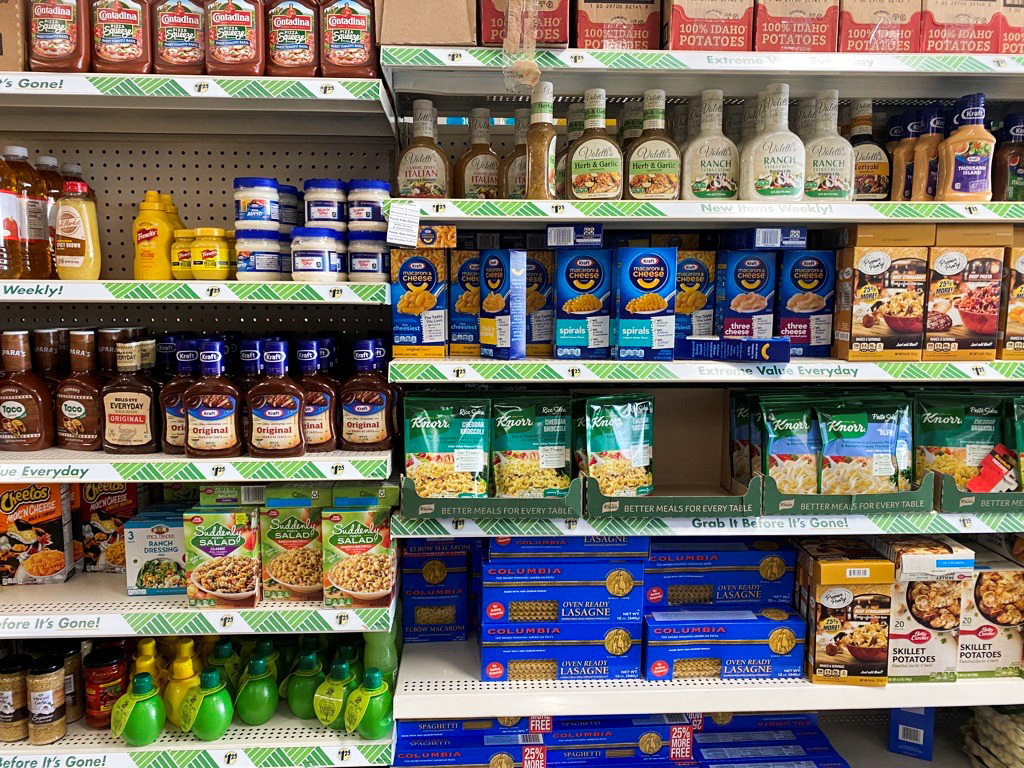
US discount stores like Dollar Tree and Dollar General hold potential for growth for makers of household goods and food manufacturers, which are creating specialised teams, taking lower prices for products and exploring quick seasonal flavours to appeal to budget-conscious customers attracted by low prices on staple items. It's a move welcomed by the discounters that are adding fresh produce and ready-made budget meals to their shelves and installing freezers and refrigerators. However, private-label products, already abundant in the stores, now include more luxury brands such as Dollar General's Nature's Menu for pets.
The South African rand has weakened after worse-than-expected March retail sales data and the dollar hitting a six-week high. Information from Statistics South Africa data indicates that the country experienced a 1.6% drop in year-on-year retail sales during March. Meanwhile, concerns about an ongoing power crisis was heightened after reports of a further delay in maintenance at the country's only nuclear power station.
The Indian rupee is set to open unchanged today (20 May) after a further rise in US yields and an optimistic outlook over the US debt ceiling buoyed investor sentiment, and the currency is expected to remain at a similar value to last trading day. The rupee had fallen to INR82.44, the lowest point in six weeks. The currency faces risk on both sides, analysts said, with expectations of support from the Reserve Bank of India on one side, and yields and momentum on the other.
US politicians' apparent willingness to reach a deal on raising the debt ceiling and avert a default is giving investors confidence. MSCI's broadest index of Asia-Pacific shares increased by 0.78% on Thursday, the Nikkei index hit a 20-month peak of 30,667.13 and Hong Kong's Hang Seng climbed by 0.93%. Despite the optimism, analysts remain cautious due to historic last-minute decision making and treasury having "almost run through all of its authorised extraordinary measures to keep paying the bills". The US debt ceiling issue has taken priority in the markets, over mixed economic data releases and the outcome of the Federal Reserve’s minutes.
After the rupee fell to its lowest value against the US dollar since March 6, the Reserve Bank of India reportedly sold dollars via public sector banks. The RBI intervened as the rupee slipped past INR82.50 against the dollar.
China's currency, the yuan, hit a multi-month low and fell through the critical seven per US dollar level, with pundits identifying the US Federal Reserves’ policy as the main contributor rather than domestic economic weakness. As doubts grow over China’s economic recovery, foreign investors have left markets and the currency has fallen by 4% since the end of January. Analysts from Nomura and Societe Generale have predicted that the yuan could drop to seven to the dollar soon. Additionally, the interest rate gap remains wide, causing some hedge funds to use yuan as a funding currency.
US importers are increasing volumes run through West Coast ports after 12 months of slow trade, as retailers and suppliers rework supply chains and return to previous trading patterns, despite labour contract talks dragging on. However, some supply chain executives believe that West Coast ports will struggle to regain their 2019 market share because of the shift towards the East Coast and Gulf of Mexico ports, and an increasing number of companies moving production to Mexico to avoid US tariffs. An observed 10% market share gap will never be regained, said one supply chain director at Million Dollar Baby.
Sterling continued to fall after reaching a three-week low against the US dollar, owing to Britain's tepid economic performance and a softening labour market. This comes after data from the previous week's showed the jobless rate rising to 3.9% for the three months to March, signifying a slow growth in the economy. Michael Brown, strategist at TraderX, said the combination of "high core inflation, very slow growth and a softening labour market" is why "things don't look great at the moment so it's perhaps no surprise to see sterling lower".
The London interbank offered rate (LIBOR), which for four decades was the dominant benchmark for determining global interest rates, is set to be replaced by a number of locally-based indices. The move comes after LIBOR hit the headlines in 2012 amid a scandal surrounding rate-fixing. While the benchmarks replacing LIBOR are theoretically seen as more suited to today's finance industry, their incorporation has been difficult, with contracts on hundreds of trillions of dollars having to be renegotiated.
Gold is emerging as the top investment choice for professionals and retail investors as they consider what to do in the event of a US default. Analysts at RBC Capital have indicated that “gold looks like one of the few likely candidates that would bear the burden of resulting market flows from default anxiety.” Data from the World Gold Council shows that central bank purchases of gold hit a record high in Q1 2022, while LBMA-accredited precious metals refiners have reported seeing far higher volumes than usual of large bars. Other investments suggested include the yen, the Swiss franc, and high-quality international equities.
Analysts have expressed surprise at the recent 2% bounce in the US dollar, given that greenback was widely expected to continue its decline. The general consensus was that cooler inflation and potential interest rate slowdowns would make for a lower US currency. Analysts have put the bump down to increased safe-haven demand revolving around worries about US debt ceiling negotiations, the vulnerability of US banks and uncertainty over the global economy's outlook. Traders currently expect the US Federal Reserve to cut interest rates significantly later this year due to a falling economy, something which Alvin Tan, head of Asia FX strategy at analysts RBC Capital Markets, doubts will happen, stating there is "a chance that US interest rates could grind higher." The net short bets of hedge funds and other speculators against the dollar amounts to $14.56bn, the largest position since mid-2021, which Chester Ntonifor, FX strategist at BCA Research, suggested rendered a potential rebound.
The Turkish lira reached an all-time low against the dollar following President Erdogan's stronger-than-expected showing in the recent presidential election, with the currency losing over 1% since the vote. The equity markets and banking stocks fell further, leaving many of the bonds and issues below the 70 cent margin for distressed territories, although the cost of insuring the country's debt against default fell slightly. Foreign investors have become increasingly wary of investing in Turkey, with net international reserves dropping to over a 21-year low, while Turkish banks are restricting access to individual loans and postponing decisions on extending corporate loans.
The Canadian dollar has weakened against the US dollar, losing 0.5% and trading at 1.3520 to the US$ as oil prices fell and Bank of Canada Governor Tiff Macklem failed to endorse the economic markets' recent move to price in another interest rate hike by the central bank. Macklem commented on April's inflation increase, saying he believed that this was an anomaly, and that consumer prices would continue to come down, following the release of the Bank of Canada's financial system report. This differs from the views of the economic market, which sees an estimated 60% chance of the central bank increasing interest rates again by July 2018. The result of this is that the money markets lowered this percentage from 80% prior to the comments made by Macklem.
Currency fluctuations' effect on N.American cos fell in Q4, report shows
Reuters
23-05-18 18:42
The negative effect of currency fluctuations on North American firms dropped in Q4 2015 compared with the previous quarter, according to data from Kyriba; the collective exchange-rate hit - including on firms in the US, Canada and Mexico - was $28.94bn in Q4, down from $43.15bn in 2015's Q3; which was the highest negative impact on record for the firm, with data going back to 2013. However, Q4 2015 was still up sharply from the year-ago period, when the hit was $4.56bn.
The Indian rupee has reached a two-month low against the US dollar thanks to on and offshore arbitrage flows. At its lowest level since 16 March, the opening of the arbitrage has intensified dollar/rupee trading. The US dollar's growing index has fuelled the fall of not just the offshore and onshore arbitrage, but also of Asian currencies. Meanwhile, US yields have powered the dollar index, with two Fed policymakers saying US inflation does not appear to be cooling off, which will not allow the central bank to pause the interest-rate-hike campaign.